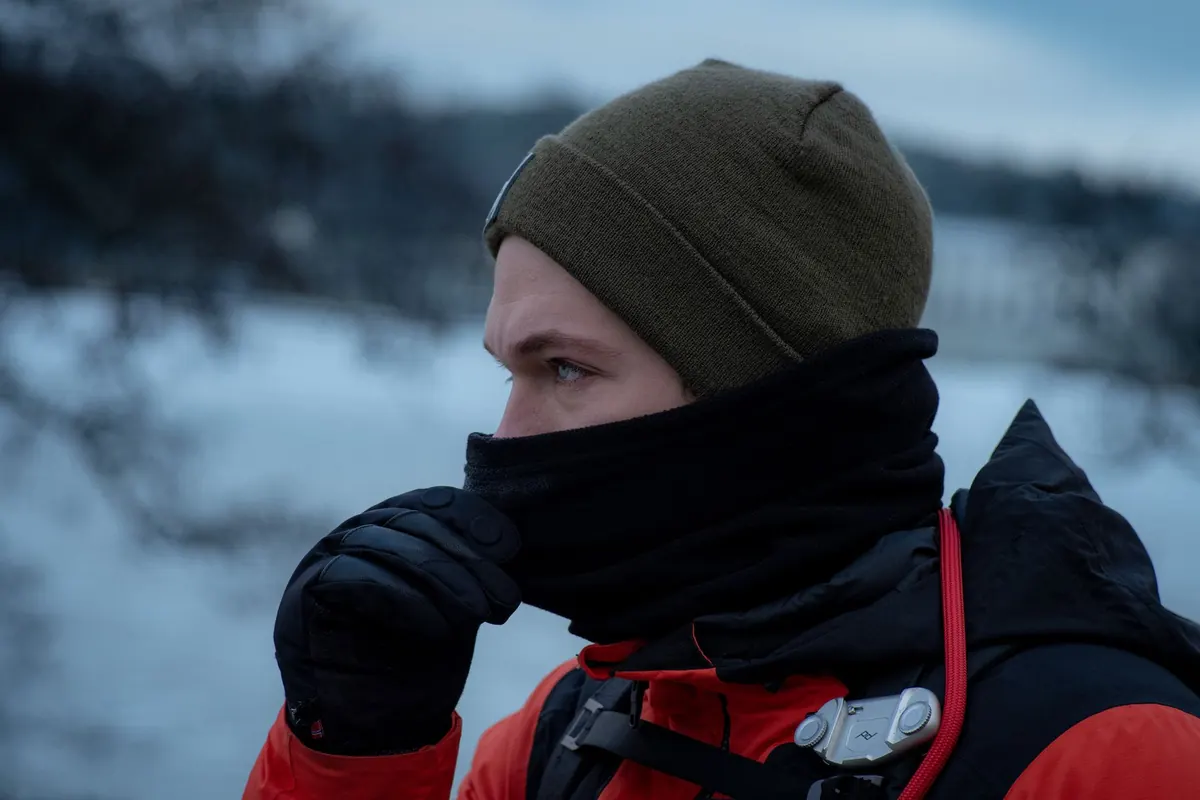
Most men own a decent winter coat. What they don't own is a system. The cold finds the gaps anyway — at the collar, the wrists, the small of the back — and the usual response is to add another layer, then another, until you're a slow-moving pile of fabric that still feels cold on the walk to the train. Layering isn't about quantity. It's about order, fit, and letting moisture escape. Here are the mistakes that show up most often, and the fixes that actually work.
Mistake 1: Layering for Bulk Instead of Warmth
A thick sweatshirt over a thick flannel over a T-shirt feels substantial. It also traps very little insulating air, because each heavy layer compresses the one beneath it. Warmth comes from dead air held in place, which is why a thin merino base, a mid-weight fleece, and a shell will outperform three heavy cotton pieces at half the volume.
The fix: think in three jobs rather than three garments. Base layer manages moisture. Mid layer traps heat. Outer layer blocks wind and rain. Any layer that doesn't do one of those jobs is weight you're carrying for nothing. If you can't raise your arms above your head comfortably, you've already overbuilt.
Mistake 2: Cotton Against the Skin
Cotton soaks up sweat and holds it. Once damp, it conducts heat away from your body, and it dries slowly. A cotton T-shirt under a coat is fine for a five-minute walk to the car; it's a poor choice for a commute that involves walking, stairs, and a warm train carriage.
Choose a base layer in merino wool or a synthetic knit. Merino regulates temperature well and resists odour; synthetics dry fast and cost less. Both come in light, mid, and heavy weights, so match the weight to the day rather than buying one heavy set in October and wearing it until March.
Mistake 3: Skipping the Mid Layer, or Choosing the Wrong One
Many men go straight from a shirt to a heavy parka. That works in dry, still cold. Add wind or a long wait outdoors and the coat alone can't hold enough warmth.
The mid layer is where you have the most control:
- Fleece — cheap, breathable, good for active days. Not windproof.
- Down or synthetic fill — the best warmth for the weight, ideal when you're standing around. Down loses performance when wet; synthetic keeps more of its loft.
- Knitted wool jumper — smart enough for the office, warm under a shell, bulky under a slim coat.
Pick the mid layer for what you'll be doing, not for what looks best on a hanger. If you're walking several miles, go lighter. If you're standing at a match for two hours, go warmer.
Mistake 4: Ignoring Proportions and Where Layers End
Layering changes your silhouette, and most problems come down to length and fit rather than colour. A base layer should sit close and stay tucked. A mid layer should end at or just below the hip — a long jumper under a short jacket pushes fabric out at the waist and makes you look wider than you are. The outer layer should be the longest piece, with room to close over everything underneath without pulling across the chest.
Under a tailored coat, keep the layers thin: a merino base and a fine-gauge knit rather than a chunky cable jumper. A technical shell gives you more room to work with. Two coats of similar length worn together — a puffer under a trench, say — usually reads as bulky rather than considered.
Mistake 5: Sealing Yourself In
This is the mistake that ruins otherwise good outfits. You dress for the cold, walk briskly, sweat, then stand still and freeze because the damp layers are now working against you. Breathability matters as much as insulation.
The fix is ventilation. Open the collar or the zip while you're moving and close up when you stop. Look for pit zips on shells and jackets with two-way zips. Avoid a non-breathable raincoat over warm mid layers unless you're genuinely standing still. If you arrive somewhere clammy, you overdressed — remove a layer before you leave next time.
Mistake 6: Neglecting the Ends — Head, Hands, Feet, Gaps
Heat escapes fastest where layers don't overlap. A scarf or high collar, a hat, and gloves do more for perceived warmth than an extra jumper. On your feet, thin cotton socks inside boots are a common error: they hold sweat and offer little insulation. A single pair of wool or wool-blend socks, sized to the boot, works better than two thick pairs that bunch and restrict circulation.
Check your overlap points before you go out:
- Base layer tucked, not bunching at the waist.
- Base layer cuffs sitting inside the glove or under the sleeve.
- Mid layer sleeves not dragging past the outer jacket's cuffs.
- Collar or scarf covering the gap between coat and neck.
- Jacket hem long enough to cover the top of your trousers' waistband.
These small overlaps matter more than another half-centimetre of insulation. On very cold days, add a warm hat and a neck gaiter, because a lot of heat leaves through an uncovered head and neck. If you have a circulatory condition or take medication that affects how you feel cold, it's worth asking a doctor how to handle prolonged exposure.
How to Get It Right Tomorrow Morning
Start with the weather and your route, not your wardrobe. Cold and dry, walking: light merino base, fleece, windproof shell. Cold and wet, mostly standing: base, synthetic or down mid, waterproof shell, hat, gloves, wool socks. Mild but windy: base and shell, and leave the mid layer at home.
Then test it. Step outside for ten minutes before you commit to the day. If you're warm standing still indoors, you'll be too warm walking. If you're cold after two minutes outside, add warmth at the middle of the stack, not the outside — a warmer base or mid does more than a thicker coat.
Buy layers that fit under each other, in weights you'll actually wear, and retire the cotton T-shirt to summer. Do that and cold weather stops being something you dress against and becomes something you dress for.
Photo: Nicolò Pais / Pexels