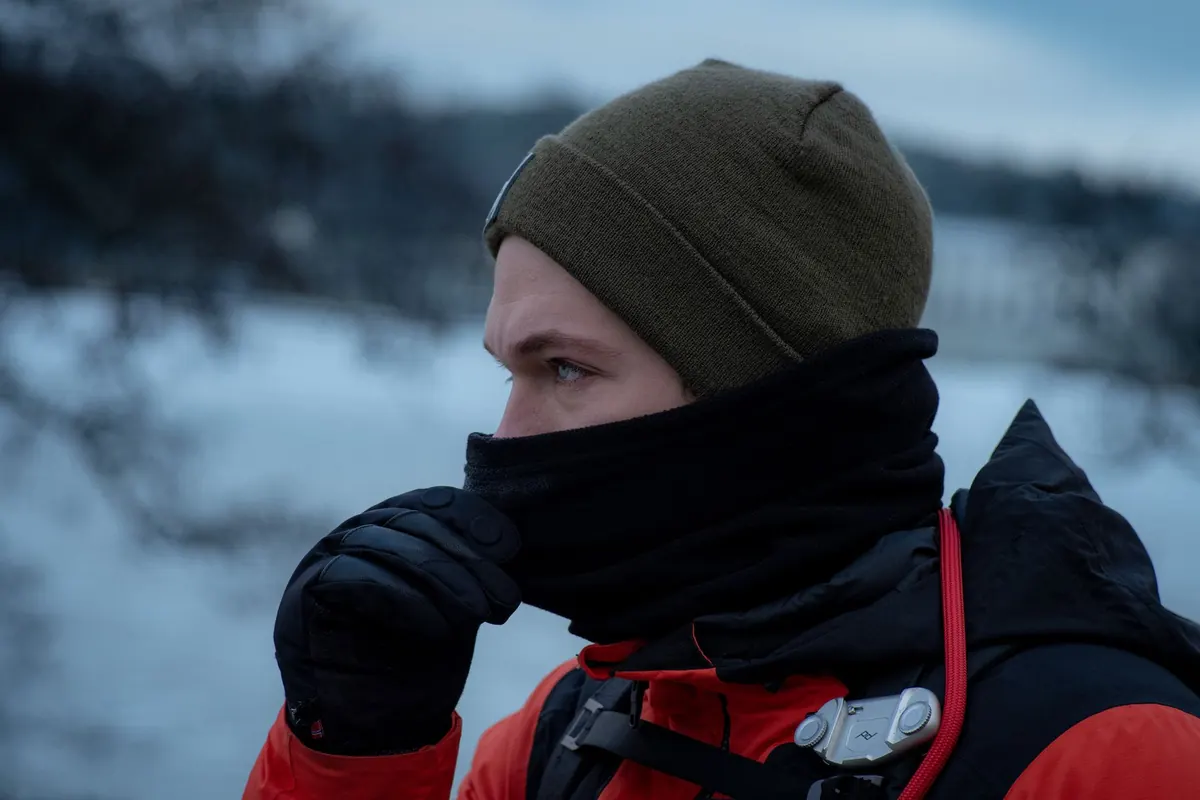
A loch can look like a postcard at eleven in the morning and like a bad idea by one. The wind arrives across open water with nothing to slow it, the rain comes at you sideways, and the sun is back out before you have found your gloves. You cannot do much about the weather. You can decide whether you enjoy walking in it.
Good loch-side outerwear is less about one expensive jacket and more about a system: a thin base that moves sweat away, a mid layer that holds warmth, and a shell that keeps wind and rain out. Get the order right and a dreich afternoon turns into something you look forward to.
The wind does more damage than the rain
When people talk about Scottish weather they usually mention rain. In practice, the wind is what makes a walk miserable. A fine drizzle on a still day is pleasant. The same drizzle driven off Loch Lomond at thirty miles an hour feels like needles, because moving air strips away the layer of warmth your body has built up around itself.
That is why a windproof layer matters even when the sky is clear. A fleece on its own is warm in the car park and useless on the headland. A waterproof jacket with no wind resistance is a plastic bag with better branding. What you want on the outside is a shell that blocks wind first and sheds rain second, and does both without turning into a sauna when you start climbing.
The three-layer system, tuned for the west coast
Base layer
Merino or a synthetic technical fabric, close to the skin, no cotton. Cotton soaks up water and holds it against you, which is exactly what you don't want when the temperature drops. One good base layer is enough; a second just adds bulk without adding warmth.
Mid layer
This is your adjustable warmth. A grid fleece or a light synthetic insulated jacket works well for most loch walks, because it stays warm when damp. Down is lighter and warmer for its weight, but it loses most of its insulating value when wet, so it belongs in a dry bag or under a proper shell rather than on its own in a coastal squall. If you run cold, a thin insulated jacket under the shell is a sensible January choice; leave it at home in July and take a fleece instead.
Shell
Waterproof, windproof and breathable, with enough room underneath for both layers. If the jacket only fits over a t-shirt, it will strangle you the moment you zip it over a fleece, and you will end up walking with the front open, which defeats the point.
What to look for in a shell
- Waterproof rating. Manufacturers list a hydrostatic head figure in millimetres; the higher it is, the more water pressure the fabric resists. Testing methods differ between brands, so treat the number as a rough comparison rather than a promise. For sustained, wind-driven rain you want a proper waterproof membrane, not a shower-resistant coating.
- Taped seams. Water finds stitching. Every seam on a genuinely waterproof jacket should be sealed.
- A hood that adjusts. Look for a wired or stiffened peak and at least two points of adjustment, around the face and at the back. A hood that flaps loose funnels rain straight down your neck.
- Pit zips or chest vents. You will overheat on the climb and freeze at the top. Vents let you dump heat without taking the jacket off.
- A storm flap over the main zip. A small detail that makes a real difference in horizontal rain.
- Adjustable cuffs and hem. Velcro cuffs and a drawcord hem stop the wind finding the gaps.
- Pockets that clear a hip belt. Chest or high hand pockets if you carry a rucksack.
- A durable water-repellent finish. That is the coating that makes rain bead up and roll off the outer fabric. It wears out long before the membrane does, and it can be restored.
Windproof the edges, not just the middle
Wind gets in through the small openings. Cinch the hood, close the collar, tighten the cuffs, pull the hem cord until the jacket sits against your hips rather than flapping. Add thin gloves and a hat that fits under the hood, because a hood alone leaves your ears exposed to wind and to the fabric rubbing. A neck gaiter does more for warmth than an extra jumper in most conditions.
Don't forget below the waist. Waterproof overtrousers that pull on over your boots will save a walk faster than any jacket. A wet thigh chills you quickly, and trousers that dry slowly stay wet all day.
Packing list for a loch day
- Base layer already on, merino or synthetic.
- Mid layer worn or in the pack, depending on the temperature and how much you will be standing still.
- Waterproof shell with hood and taped seams, near the top of the pack rather than at the bottom.
- Waterproof overtrousers.
- Thin gloves and a hat, even in summer. The wind on open water is colder than the car park.
- A dry bag for your phone, keys and spare layer.
- A flask, and something to sit on that isn't soaked.
Keep the shell working
A waterproof jacket fails in two ways: the membrane gets damaged, or the outer fabric stops repelling water and wets out. When that happens the jacket feels cold and clammy even though no water has got through, because the damp outer layer blocks breathability.
Wash technical shells occasionally with a dedicated technical wash rather than normal detergent, which leaves residues that attract water. Follow the care label, then tumble dry on low or warm the jacket gently with an iron through a cloth if the label allows, as heat reactivates the water-repellent finish. When that stops working, apply a wash-in or spray-on reproofer. Repair small tears and lifting seam tape with a patch before they spread. Store the jacket clean and hung up rather than compressed at the bottom of a bag for months.
Before you leave the house
Check the forecast, then assume it is wrong in the direction of more wind. Take the shell even when the sky is blue; on the west coast the weather usually turns within an hour of the water coming into view.
One last thing, since this is a fashion site as much as a gear one: a well-cut shell in a colour you actually like will get worn far more often than a technical jacket you resent putting on. Charcoal and deep green disappear into a grey day, while a rusty orange, a soft ochre or a clean navy works with jeans, walking trousers and a dress alike. Layering well is not the enemy of looking good. A fine merino base, a textured fleece and a clean-lined shell can look entirely intentional in a village café after the walk as much as on the shore.
Photo: StockSnap / Pixabay