Two jackets hang side by side in the same shop window. One is dark and glossy, catching the streetlight. The other is soft and matte, and almost impossible not to touch. Both cost real money, both will outlast most of your wardrobe, and both force a decision every time you reach for them. Leather and suede are not interchangeable, and the one you buy first should depend less on trends and more on where you live, how you dress, and how much patience you have.
Start With the Life You Actually Live
If you own neither and want one jacket that works hardest, buy leather. It handles wind, a passing drizzle, and daily wear with far less drama, which makes it the safer first purchase for most people.
Buy suede first only if your winters are mild and mostly dry, your commute is largely indoors, and you already have a waterproof layer for the wet days. Suede rewards that setup with texture and warmth that leather struggles to match. It punishes the wrong setup quickly and expensively.
What Actually Makes Them Different
Both begin as hide. That is where the resemblance ends.
Leather is made from the outer surface of the hide, where the fibers sit tightest, and tanneries finish that surface so it resists abrasion and light moisture. Suede comes from the underside of the hide, or from a split layer, sanded until a soft nap rises. That nap is the entire appeal and the entire problem: it invites fingertips and stains in equal measure.
The practical upshot is simple. Leather takes a beating and keeps its shape. Suede takes a scuff and remembers it. Neither material is superior. They are built for different days.
Weather, Wear, and the Real-World Test
A finished leather jacket will shrug off a short walk in light rain, cut wind completely, and soften into the shape of your shoulders after a few months. It is not a raincoat, though. Soak it through and you will see water marks, and drying it near a radiator is the fastest way to crack the finish.
Suede's relationship with water is the reason so many people hesitate, and rightly so. Rain spots the surface and mats the nap. A wet suede jacket has to dry slowly at room temperature, away from heat, and even then the marks may stay. Oil is worse: hand cream, a bicycle chain, a greasy restaurant seat. Repellent sprays help, but they make suede water-resistant at best, never waterproof.
In terms of feel, suede is lighter and often warmer for its weight because the raised nap traps air. Leather is heavier, stiffer at first, and molds to you over time. For a cold, dry autumn, suede is the more comfortable jacket. For a windy, unpredictable spring, leather is the one you will not think twice about.
Styling: Where Each One Earns Its Place
Leather reads sharp. A black or dark brown moto or bomber works over a hoodie and jeans, over a plain tee, or over a collared shirt in the evening. It adds structure to a loose outfit and a little edge to a plain one. A leather jacket is also forgiving of a bad haircut and a long week.
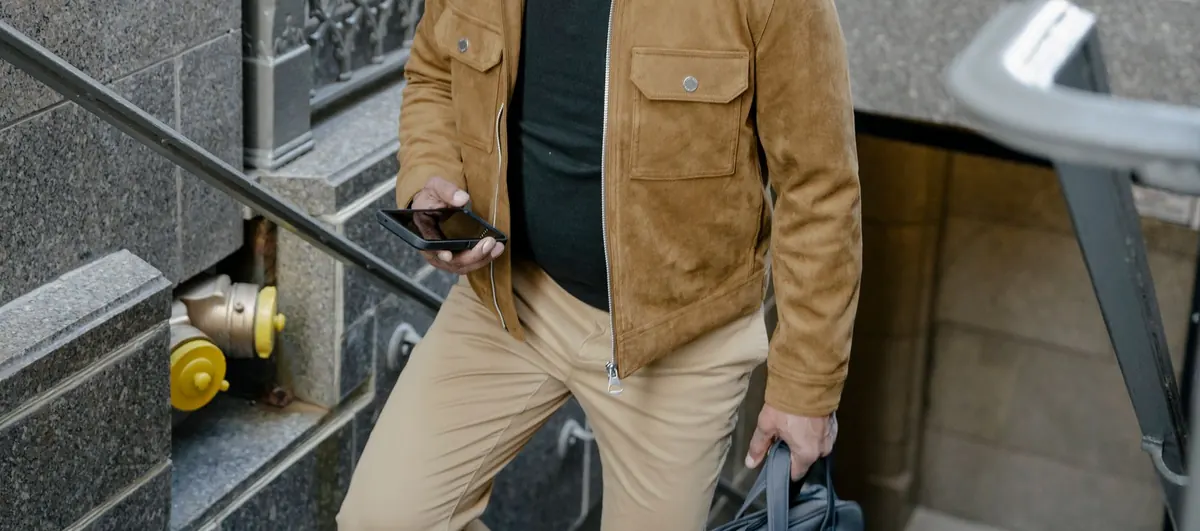
Suede reads softer and more relaxed. It behaves best in earth tones and unstructured cuts, and it pairs naturally with knitwear, flannel, corduroy, and chinos. In a trucker or chore silhouette, it looks like something you inherited from a stylish relative. In black, it can look flat and dusty, which is a shame.
- First leather jacket: black or dark brown, clean lines, sized so you can wear a light sweater underneath without strain.
- First suede jacket: tobacco, rust, or olive. Mid-tones hide everyday marks; very light suede shows everything and very dark suede collects lint.
- Fit check: sleeves should end at the wrist bone, and the jacket should close without pulling across the chest.
- Hardware: matte or antique finishes age better than bright chrome on suede, which already has plenty going on.
Care: What You Are Signing Up For
Leather asks for a few minutes a season. Suede asks for a habit.
- Wipe leather with a damp cloth and let it air-dry away from heat.
- Condition it lightly once or twice a season, not monthly. Over-conditioning softens the structure.
- Hang it on a wide wooden hanger and leave breathing room on the rail.
- Store it in a breathable cotton bag, never plastic, which traps moisture.
- Fix a sticky zip or a torn lining early, before it becomes a re-lining job.
For suede, brush the nap gently after wearing, spray a protector on it when new and again each season, blot spills rather than rubbing them, and hand grease and oil stains to a professional cleaner. Test any product on a hidden patch first, inside the hem or behind the collar.
Cost Per Wear: The Honest Math
Ignore the price tag for a moment and divide what you pay by the number of times you will realistically wear the thing. A jacket that costs more but gets worn three times as often wins without argument.
Leather tends to justify its price through sheer wear count. It survives years of daily use, holds up well when bought secondhand, and often keeps decent resale value. Suede can match that in a dry climate, but add the hidden costs: cleaning bills, protector sprays, and the jacket you leave at home because the forecast looks uncertain. A suede jacket worn twice a season is expensive no matter what you paid.
Inspect before you buy, new or used. On leather, check the lining at the armpits, the zip teeth, and the seams at the shoulders. On suede, look for worn, shiny patches at the cuffs and collar, water rings, and crushed nap under the arms. Those are the places where a jacket tells you how much life is left.
How to Decide in Five Minutes
Answer three questions honestly.
- How many wet days do you get each season, and do you already own a rain shell?
- Will this be your only jacket for spring and autumn?
- Do you want to look sharp or look relaxed?
If rain is common and you have no waterproof layer, leather is the answer, and it will earn its place within a month. If your climate is dry and you own a rain jacket, suede gives you something leather cannot: warmth, texture, and a softer silhouette that makes ordinary clothes look considered. Most wardrobes get to both eventually. The order just depends on the weather outside your door.
Photo: Barbara Olsen / Pexels