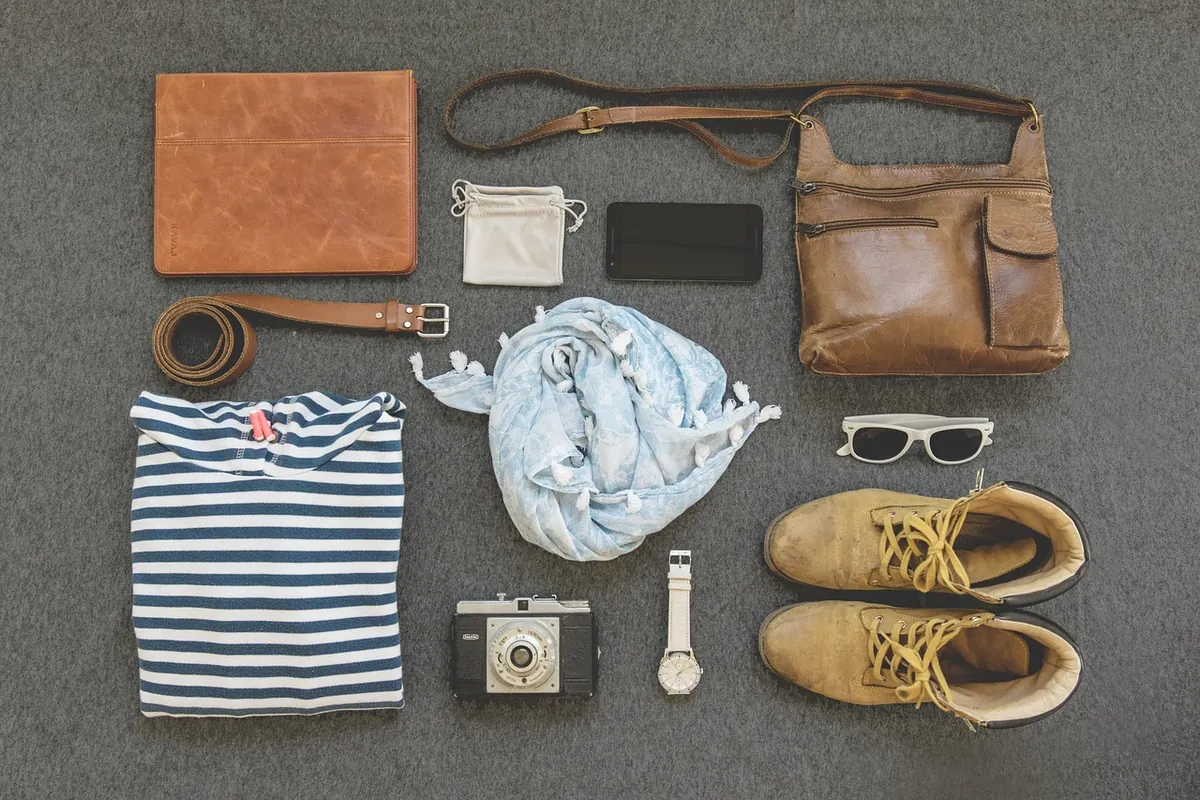
You already have the outfit. A white shirt, dark jeans, a knit dress, a blazer that fits — the pieces that do the daily work. What separates a good outfit from a finished one is rarely the clothing itself. It is the handful of decisions made at the end: the belt you reach for without thinking, the bag that holds its shape, the earrings that stop a plain shirt from reading as an afterthought. Accessories are not decoration. They are editing.
The most common mistake is volume. Seven pieces worth owning does not mean seven pieces worn at once. It means keeping a small, reliable set that covers almost every situation, then choosing two or three from it depending on the day. Here is the checklist, and how to use each piece well.
Begin With Structure: The Belt and the Bag
The belt
A simple outfit — a shirt with trousers, a slip dress, a long cardigan — usually lacks one thing: a clear waist. A belt supplies it. Choose the width to match the garment. A slim belt of roughly two centimetres works with dresses and fine fabrics; a wider one suits denim and heavy knits. The buckle should be the only shiny thing in that part of your body. If it competes with a necklace, one of them has to go.
Ignore the old rule about matching your belt to your shoes exactly. Match the tone instead: warm browns with warm browns, black with black, tan with camel. A belt in a colour you already repeat elsewhere in your wardrobe — your coat, your boots, your bag — gets worn ten times more often than a statement buckle.
The bag
Shape does more work than colour. A slouchy tote reads relaxed. A boxy, structured bag reads considered, which is exactly why it lifts a plain outfit so effectively. Watch where the bag lands on your body. A shoulder bag that stops at your waist cuts the line of a long coat; one that tucks under the arm keeps the silhouette clean.
If you own only one good bag, make it structured, neutral, and in a tone that sits comfortably with your coats and your shoes. That single bag will finish more outfits than five trend pieces.
The Metal You Never Take Off
Jewellery works best when it looks like it belongs to you rather than to the outfit. Pick one metal — gold, silver, or a deliberate mix — and repeat it across a watch, a ring, a pair of hoops.
A watch is the most practical accessory on this list, because it is useful and it fills the space at your wrist where sleeves end and hands begin. A leather strap in a colour you already wear, or a simple metal bracelet, does the job. If watches are not for you, swap in one piece of fine jewellery you never remove: a thin chain, a signet ring, a bangle. Wearing the same piece daily builds a signature, and signatures are what people remember.
One caution: a watch and a bracelet on the same wrist clatter and scratch. Split them, or choose one.
Earrings, Chosen Once and Worn Often
Earrings frame the face, which is why a small pair can do more than a large necklace. Two questions settle the choice. Where is your hair? Worn up, cut short, or tucked back, and earrings can be longer and more visible. Worn loose, and studs or small hoops are the ones that will actually be seen. What is happening at your neck? A turtleneck, a high collar, or a scarf means skip the necklace entirely and let the earrings carry the look.
Keep a pair of plain gold or silver studs for busy days and loud prints, plus one pair with a little movement for evenings. Stay in one metal. If you have chosen silver, keep it silver.
Sunglasses and a Scarf: Two Fast Finishers
Sunglasses are the quickest way to make a t-shirt and jeans look intentional. Fit matters more than branding. The frame should sit close to the brow without resting on your cheeks or sliding down your nose. As a general guide, angular frames soften round faces and rounded frames soften angular ones. Own one dark pair and one lighter tortoiseshell or metal pair, and keep them in a case so they stay wearable.
A scarf adds colour and texture where nothing else reaches: the space between your jaw and your chest. Three ways to wear it:
- Knotted close at the neck over a plain shirt or knit, which reads polished and deliberate.
- Tied to a bag handle, which adds colour without adding bulk to your body.
- Draped over the shoulders, or worn as a head wrap on a difficult hair day.
Silk gives shine and structure. Wool and cashmere give warmth and softness. Buy in colours that already exist in your wardrobe, or the scarf will stay folded in a drawer.
Shoes Set the Register
Shoes tell an outfit what it is. The same jeans and blazer read casual with clean white sneakers and sharp with a low heel or a loafer. Before you leave the house, look down and ask whether the shoes match the register of everything above them.
Three pairs cover most wardrobes: a clean everyday pair, a polished pair for work and evenings, and one pair with shine — patent, metallic, or a deep colour. Then keep them clean. Scuffed shoes undo everything above them, however good the rest of the outfit is.
The Seven-Piece Checklist
- A belt in a tone you already repeat.
- A structured bag in a neutral you wear often.
- A watch, or one piece of jewellery you never take off.
- A pair of earrings that suit your hair and neckline.
- Sunglasses that fit your face properly.
- A scarf in a colour already in your wardrobe.
- Shoes that match the register of the outfit.
Now the practical part: do not wear all seven. Choose two or three and let them answer each other. If the belt is doing the talking, keep the jewellery quiet. If the earrings are the focus, skip the necklace. If the bag is the boldest thing you own, let everything else stay simple.
Before you walk out, step back three feet from the mirror rather than leaning in close. At that distance you see what other people see: balance, proportion, and whether one element has started to shout. If it has, take it off. Dressing well is mostly knowing when to stop.
Photo: LUM3N / Pixabay